
How Much Creatine Should I Take Per Day? Complete NZ Dosage Guide
Creatine is one of the most researched and effective sports supplements available today. Whether your goal is building muscle, increasing strength, or improving workout performance, choosing the right creatine product is equally important. If you’re still comparing options, check out our guide to Best Creatine in NZ 2026.
How Much Creatine Should I Take Per Day? (Quick Answer)
If you’re wondering how much creatine should I take per day, the answer is straightforward.
Most healthy adults should take 3–5 grams of creatine monohydrate daily.
This dosage is supported by sports nutrition research and is sufficient to:
- Increase muscle creatine stores
- Improve strength and power
- Support lean muscle growth
- Enhance workout performance
- Aid recovery between training sessions
While some people choose to follow a loading phase, most gym-goers can achieve excellent results simply by taking 5 grams every day.
Creatine Dosage at a Glance
| Goal | Recommended Daily Dose |
|---|---|
| General Fitness | 3–5g |
| Muscle Growth | 5g |
| Strength Training | 5g |
| Sports Performance | 5g |
| Larger Athletes (90kg+) | 5–10g |
| Loading Phase | 20g/day for 5–7 days |
Key Takeaways
✔ Most people only need 3–5 grams of creatine daily
✔ Creatine monohydrate remains the most researched form
✔ Loading phases are optional
✔ Consistency matters more than timing
✔ Creatine should be taken on training and rest days
✔ Daily supplementation is considered safe for healthy adults
What Is Creatine?
Creatine is a naturally occurring compound stored primarily in your muscles. It helps produce ATP (adenosine triphosphate), which serves as the body’s immediate energy source during high-intensity exercise.
Activities that rely heavily on ATP include:
- Weight training
- Sprinting
- Rugby
- Football
- HIIT workouts
- CrossFit
Although creatine is naturally found in foods such as red meat and fish, supplementation provides a practical way to maximize muscle creatine stores.
When selecting a supplement, many people compare different forms of creatine. If you’re unsure which type is right for you, read our guide on Creatine Monohydrate vs Creatine HCL.
Why Is Creatine One of the Most Popular Supplements?
Creatine has been studied extensively for decades and remains one of the most effective supplements available for athletes and gym-goers.
Research suggests creatine may help:
- Increase strength
- Improve power output
- Support muscle growth
- Improve training capacity
- Enhance exercise performance
- Promote faster recovery
Unlike many supplements that rely on marketing claims, creatine is supported by a large body of scientific evidence.
What Is the Recommended Daily Creatine Dose?
For most people, the ideal maintenance dose is:
3–5 Grams Per Day
This amount is sufficient to gradually saturate your muscles with creatine and support long-term performance benefits.
Taking significantly more than recommended doses typically does not produce additional benefits once your muscles are fully saturated.
A daily serving of 5 grams is considered the gold standard for most individuals. It is the quantity how much creatine should i take.
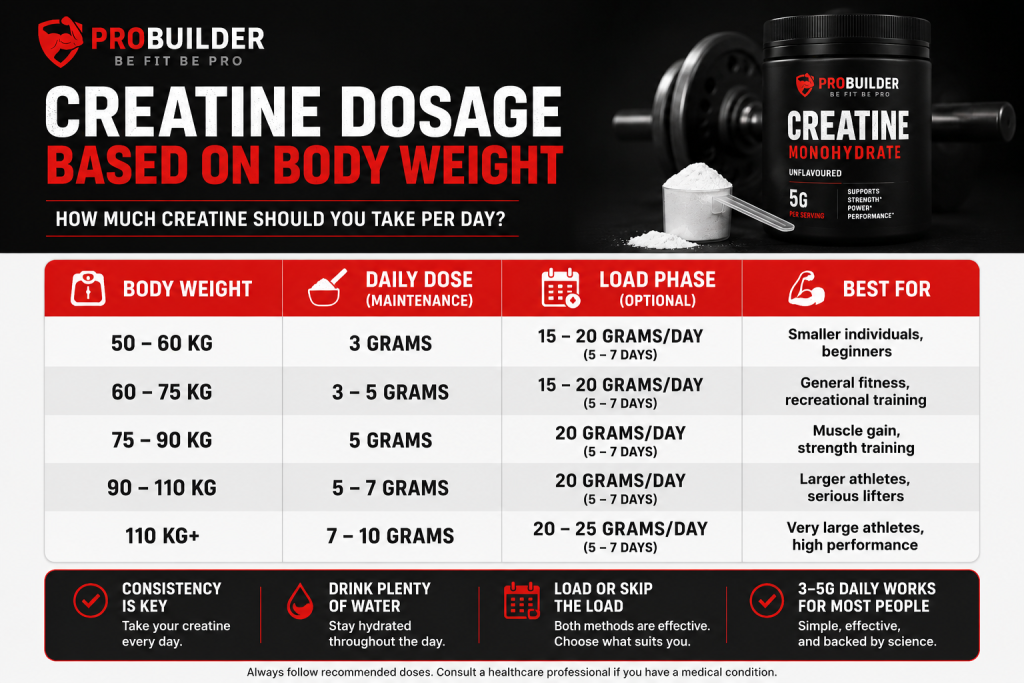
Creatine Dosage by Body Weight
Some sports nutrition professionals calculate creatine dosage using body weight.
A commonly used guideline is:
0.03 grams per kilogram of body weight daily
Creatine Dosage Chart
| Body Weight | Daily Dose |
|---|---|
| 50–60kg | 3g |
| 60–75kg | 3–5g |
| 75–90kg | 5g |
| 90–110kg | 5–7g |
| 110kg+ | 7–10g |
For convenience, most people can simply take 5 grams daily.
Once you’ve determined the correct daily dosage, it’s also worth understanding the best time to take it. Read Best Time to Take Creatine: Before or After Your Workout? for practical advice on timing your daily serving.
Should You Do a Creatine Loading Phase?
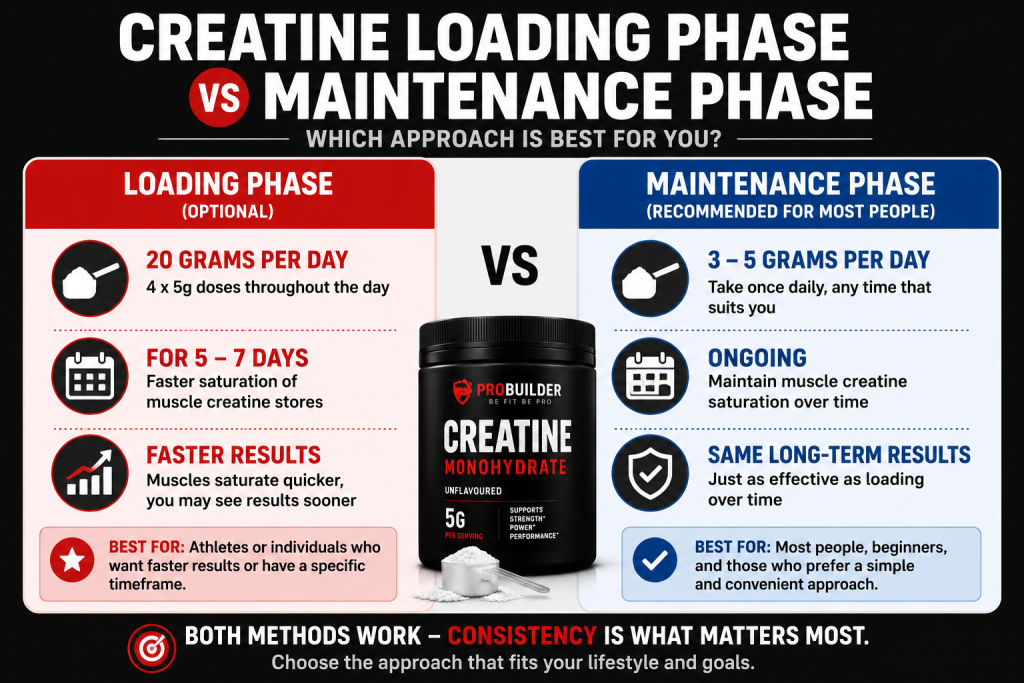
A loading phase is designed to increase muscle creatine levels more quickly.
Loading Protocol
- 20 grams daily
- Split into four 5-gram servings
- Continue for 5–7 days
After loading:
- Reduce to 3–5 grams daily
Creatine Loading Phase vs Maintenance Dose
| Factor | Loading Phase | Maintenance Dose |
|---|---|---|
| Daily Intake | 20g | 5g |
| Time to Saturation | 5–7 Days | 3–4 Weeks |
| Simplicity | Lower | Higher |
| Cost | Higher | Lower |
| Beginner Friendly | No | Yes |
| Long-Term Results | Similar | Similar |
Expert Insight
At ProBuilder NZ, most customers achieve excellent results without loading. For beginners, a simple 5-gram daily serving is usually the easiest and most sustainable option.
How Long Does Creatine Take to Work?
The answer depends on your dosage strategy.
With Loading
- Muscle saturation within approximately 1 week
- Faster initial performance improvements
Without Loading
- Full saturation within approximately 3–4 weeks
- Similar long-term outcomes
The most important factor is consistency.
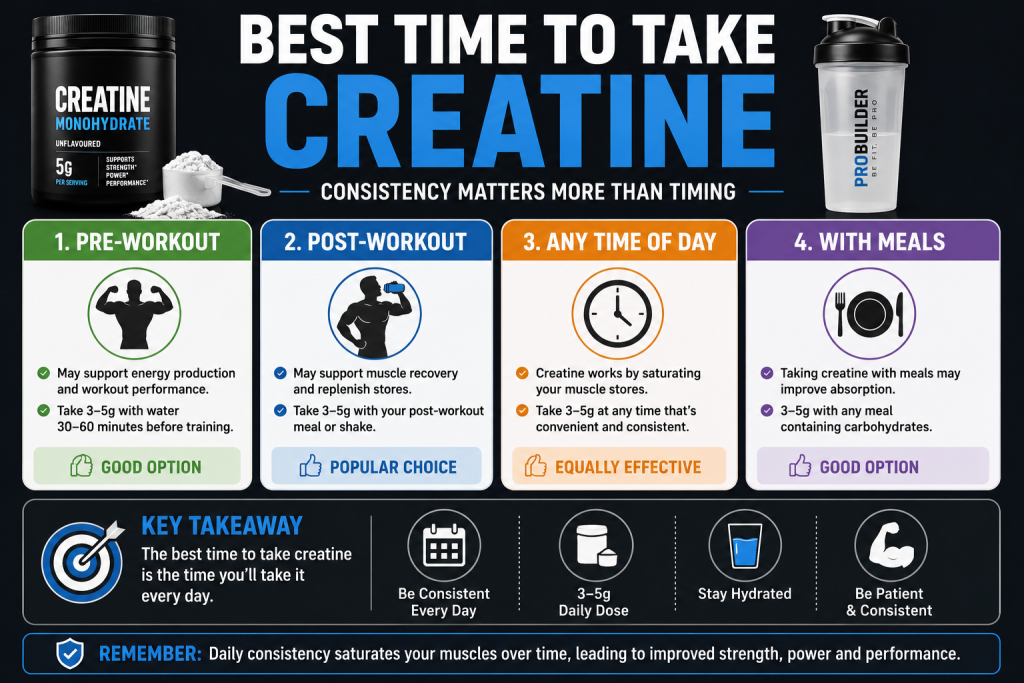
When Should You Take Creatine?
One of the most common questions is whether creatine should be taken before or after a workout.
Current evidence suggests:
Consistency Matters More Than Timing
You can take creatine:
- Before training
- After training
- With breakfast
- With lunch
- On rest days
The best time to take creatine is simply the time you are most likely to remember every day.
Many athletes combine creatine with pre-workout supplements. If you’re evaluating your options, check out our guide to Best Pre Workout in NZ.
Should You Take Creatine on Rest Days?
Yes.
Creatine works by maintaining elevated muscle creatine stores.
Skipping supplementation on non-training days may slow the saturation process.
For optimal results:
- Continue taking creatine daily
- Include both workout days and rest days
- Maintain consistent hydration
Can Creatine Help Build Muscle?
Creatine is not a magic muscle-building supplement.
However, by improving training performance and recovery, it can help support muscle growth when combined with:
- Progressive resistance training
- Adequate protein intake
- Sufficient calories
- Proper recovery
Many gym-goers combine creatine with whey protein. If you’re new to protein supplements, read our guide to Whey Protein for Beginners in NZ.
For those comparing different protein options, our article on Whey Isolate vs Whey Concentrate explains the key differences.
Does Creatine Cause Water Retention?
Yes, but not in the way many people assume.
Creatine increases water content inside muscle cells.
This intracellular water retention may:
- Improve muscle fullness
- Support performance
- Enhance training output
For most users, this effect is beneficial rather than problematic.
What Happens If You Take Too Much Creatine?
Taking excessive amounts of creatine is unlikely to improve results.
Potential side effects may include:
- Digestive discomfort
- Temporary bloating
- Water retention
- Stomach upset
Following evidence-based dosage recommendations can help minimize these issues.
Is Creatine Safe and How Much Creatine Should I Take Per Day?
Creatine is one of the most researched sports supplements available. Most healthy adults can take a daily dose of 3–5 grams of creatine monohydrate for optimal results.
Scientific reviews have repeatedly found creatine monohydrate to be safe for healthy adults when used according to recommended guidelines.
Research has examined:
- Men
- Women
- Athletes
- Older adults
- Recreational exercisers
Individuals with existing medical conditions should consult a healthcare professional before starting supplementation.
What Does Research Say?
According to the International Society of Sports Nutrition position stand on creatine supplementation, creatine monohydrate is:
- Safe for healthy adults
- Effective for increasing strength and power
- Beneficial for lean muscle growth
- One of the most extensively studied sports supplements available
This research supports the recommendation of taking 3–5 grams of creatine daily for most individuals.
Our Experience Helping NZ Gym-Goers
At ProBuilder NZ, one of the most common mistakes we see is inconsistency.
Many people focus on:
- Loading phases
- Timing strategies
- Advanced supplementation protocols
While overlooking the most important factor:
Taking creatine every day.
In practice, gym-goers who consistently consume 5 grams daily alongside proper training and nutrition tend to achieve the best long-term results.
People Also Ask
Is 5g of creatine enough per day?
Yes. For most adults, 5 grams daily is sufficient.
Can I take 10g of creatine daily?
Some larger athletes may benefit from higher intakes, but most people do not require more than 5 grams.
Should beginners do a loading phase?
No. Beginners can simply start with 3–5 grams daily.
What happens if I miss a day of creatine?
Missing one day is unlikely to significantly affect your progress.
Simply continue your regular dosage schedule.
Can women take creatine?
Yes. Women may benefit from creatine supplementation for strength, performance, recovery, and muscle maintenance.
Can I take creatine with protein?
Yes. Many athletes combine creatine and whey protein in the same shake.
If you’re looking for a quality protein supplement, see our guide to Best Whey Protein NZ 2026.
Frequently Asked Questions
No. Current evidence does not support cycling.
Yes. Creatine is widely recognized for its ability to support strength and power output.
Yes. Daily use is recommended.
Absolutely. Creatine is one of the most beginner-friendly sports supplements available.
Final Verdict
If you’re still asking how much creatine should I take per day, the answer remains simple:
Most healthy adults should take 3–5 grams of creatine monohydrate daily.
You do not need complicated protocols, expensive alternatives, or excessive servings to experience the benefits of creatine.
Combined with consistent training, adequate protein intake, and proper recovery, creatine remains one of the most effective supplements available for improving strength, muscle growth, and athletic performance.
For most New Zealand gym-goers, a daily serving of 5 grams is the ideal starting point.

