
Creatine Monohydrate vs Creatine HCL: Which Is Better for Muscle Growth in New Zealand?
Quick Answer
For most people in New Zealand, Creatine Monohydrate is the better choice. It is the most researched form of creatine, consistently shown to improve muscle growth, strength, power output, and training performance. While Creatine HCL dissolves more easily in water and requires a smaller serving size, current scientific evidence does not show that it delivers better results than Creatine Monohydrate.
If your goal is to build muscle, improve gym performance, and get the best value for money, Creatine Monohydrate remains the gold standard.
For a detailed comparison of products available locally, see our Best Creatine in NZ 2026 Guide.
Creatine Monohydrate vs Creatine HCL: Key Takeaways
- Creatine Monohydrate has the strongest scientific support.
- Creatine HCL offers better water solubility.
- Both can support muscle growth and strength.
- Monohydrate is significantly more affordable.
- Most athletes and gym-goers will achieve excellent results with monohydrate.
- There is currently no strong evidence showing Creatine HCL is superior.
Comparison Table
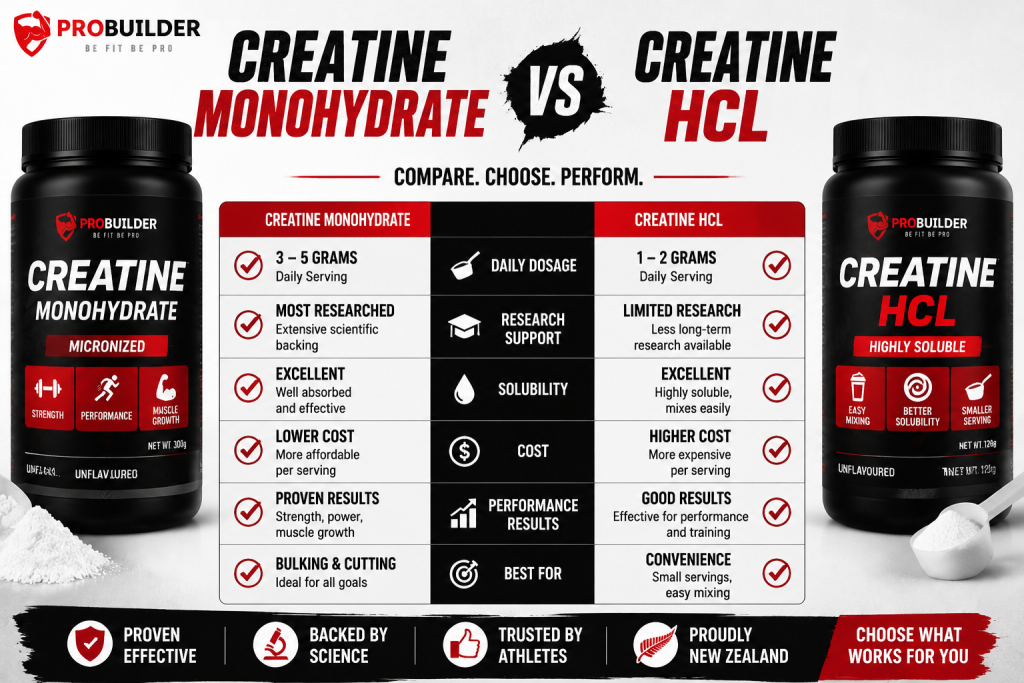
To make the Creatine Monohydrate vs Creatine HCL comparison easier, the table below highlights the most important differences in research support, performance benefits, dosage, and cost.
| Feature | Creatine Monohydrate | Creatine HCL |
|---|---|---|
| Scientific Research | Excellent | Limited |
| Muscle Growth | Excellent | Good |
| Strength Gains | Excellent | Good |
| Cost Per Serving | Lower | Higher |
| Water Solubility | Good | Excellent |
| Daily Dosage | 3–5g | 1–2g |
| Long-Term Evidence | Extensive | Limited |
| Best For | Most Users | Convenience |
What Is Creatine?
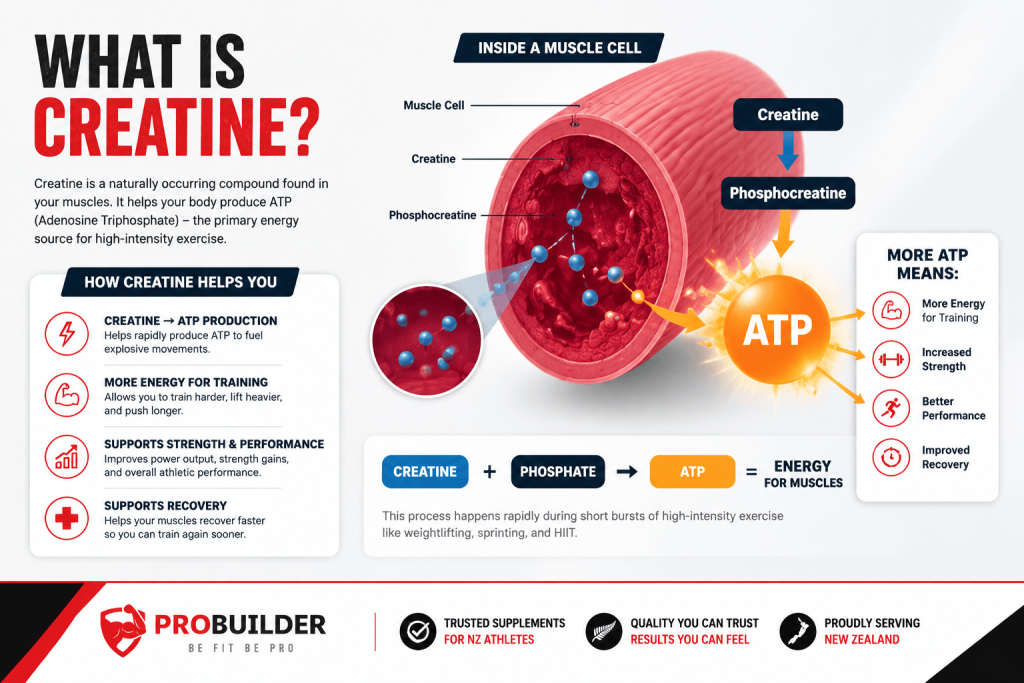
Creatine is a naturally occurring compound found primarily in muscle tissue. It plays a key role in producing adenosine triphosphate (ATP), which is the body’s primary energy source during short, intense bursts of activity.
Activities that rely heavily on ATP include:
- Weight training
- Sprinting
- Rugby
- Football
- Basketball
- CrossFit
- High-intensity interval training
Your body naturally produces creatine and also obtains small amounts from foods such as red meat and fish. However, supplementation helps increase muscle creatine stores beyond what is typically achievable through diet alone.
This is one of the reasons creatine remains among the most studied and effective sports supplements available today.
Benefits of Creatine Supplementation
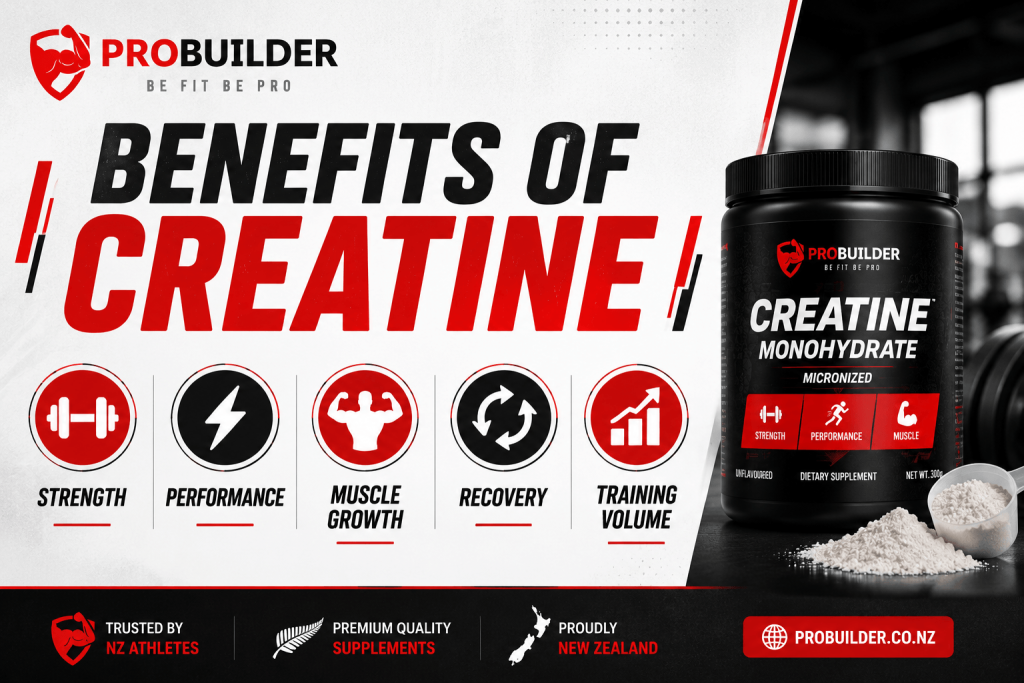
Research has consistently shown that creatine supplementation may help:
- Increase muscular strength
- Improve power output
- Enhance athletic performance
- Support lean muscle growth
- Improve recovery between training sessions
- Increase training volume
- Improve exercise capacity during high-intensity workouts
These benefits explain why creatine is used by bodybuilders, athletes, powerlifters, and recreational gym-goers around the world.
What Is Creatine Monohydrate?
Creatine Monohydrate is the original form of creatine supplementation and remains the most widely used option globally.
It consists of a creatine molecule combined with a water molecule and has been extensively studied for more than three decades.
Virtually every major sports nutrition organization references Creatine Monohydrate when discussing creatine supplementation.
Advantages of Creatine Monohydrate
- Most researched form available
- Proven safety profile
- Affordable pricing
- Consistent performance benefits
- Widely available throughout New Zealand
- Effective for beginners and advanced athletes
Potential Drawbacks
Some users experience mild water retention during the first few weeks of use. However, this occurs primarily within muscle cells and often contributes to improved muscle fullness.
What Is Creatine HCL?
Creatine Hydrochloride (Creatine HCL) is a newer form of creatine designed to improve water solubility.
By attaching hydrochloric acid to the creatine molecule, manufacturers have created a supplement that dissolves more easily and typically requires a smaller serving size.
Advantages of Creatine HCL
- Mixes easily in liquids
- Smaller serving sizes
- Convenient for travel
- Some users report improved digestion
Potential Limitations
The biggest limitation is the lack of long-term research compared with Creatine Monohydrate.
Although marketing claims often suggest superior absorption, current scientific evidence does not demonstrate superior muscle-building outcomes.
Regardless of whether you choose creatine monohydrate or creatine HCL, taking the correct amount each day is essential. Our How Much Creatine Should I Take Per Day? guide explains recommended dosages for beginners and experienced athletes.
What We Commonly See Among NZ Gym-Goers
At ProBuilder NZ, one of the most common questions customers ask is whether paying extra for Creatine HCL is worthwhile.
In practice, most gym-goers simply want:
- Better strength
- Improved muscle growth
- Enhanced workout performance
- Good value for money
For these goals, high-quality Creatine Monohydrate consistently delivers excellent results.
While some users prefer Creatine HCL because it mixes more easily, very few report noticeably greater muscle-building benefits compared with monohydrate.
This mirrors what current research suggests.
Scientific Research: Which Form Has More Evidence?
When evaluating supplements, scientific evidence matters.
According to the International Society of Sports Nutrition (ISSN), Creatine Monohydrate remains the most effective and extensively researched form of creatine supplementation.
Studies have consistently demonstrated benefits for:
- Strength development
- Power output
- Lean muscle growth
- Training volume
- Athletic performance
While Creatine HCL appears promising, there is simply far less evidence available.
For this reason, most sports nutrition experts continue to recommend Creatine Monohydrate as the first choice. One of the most important factors when evaluating Creatine Monohydrate vs Creatine HCL is the amount of scientific evidence supporting each form.
Which Is Better for Muscle Growth?
In the discussion around Creatine Monohydrate vs Creatine HCL, muscle growth is often the deciding factor for many athletes and bodybuilders. When it comes to building muscle, both forms can be effective when combined with:
- Progressive resistance training
- Adequate protein intake
- Consistent recovery
- Sufficient calorie intake
However, no high-quality evidence currently shows that Creatine HCL builds more muscle than Creatine Monohydrate.
For most people, muscle growth outcomes are likely to be very similar.
The difference is that monohydrate has significantly more research supporting those outcomes.
Creatine Monohydrate vs Creatine HCL for Strength and Performance
Strength improvements are among the most documented benefits of creatine supplementation.
Creatine Monohydrate has repeatedly been shown to improve:
- Bench press performance
- Squat strength
- Sprint speed
- Explosive power
- Workout volume
Because most performance-related creatine studies have used monohydrate, it remains the most reliable choice for athletes seeking measurable improvements.
Which Is Better for Beginners?
For beginners researching Creatine Monohydrate vs Creatine HCL, the most practical choice is usually Creatine Monohydrate because of its affordability, proven effectiveness, and widespread availability.
Reasons include:
- Lower cost
- Extensive research
- Proven effectiveness
- Easy availability
- Strong safety profile
If you’re new to supplementation, there is rarely a compelling reason to choose a more expensive alternative.
Can You Take Creatine With Whey Protein?
Yes.
Creatine and whey protein complement each other extremely well.
Whey protein provides essential amino acids that support muscle repair and growth, while creatine helps improve workout performance and strength output.
If you’re building a supplement stack, these resources may help:
Recommended Dosage
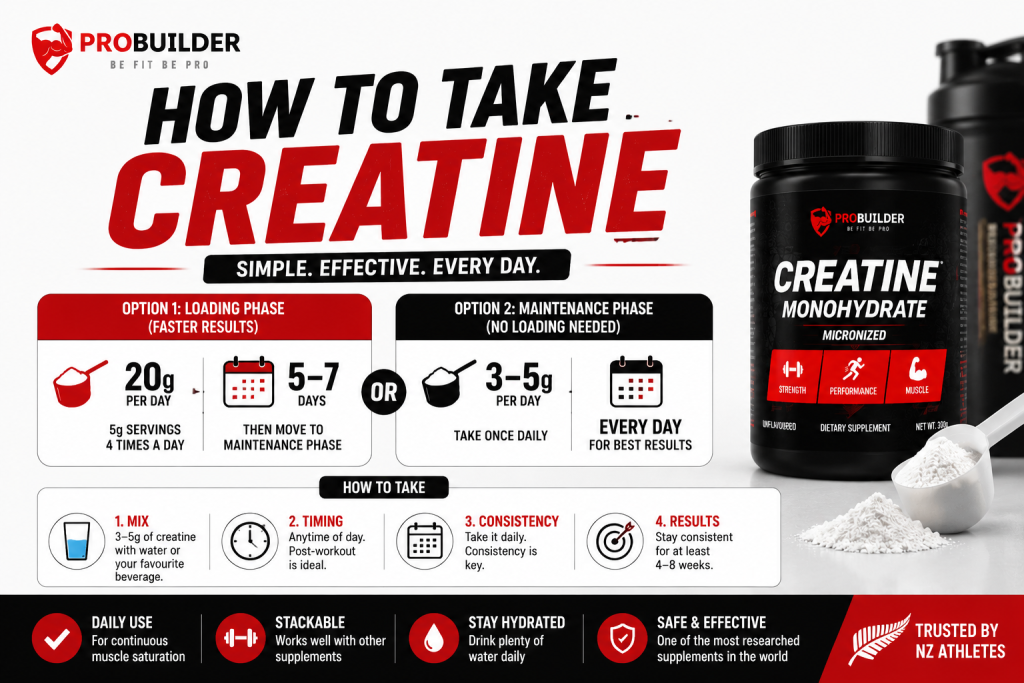
Creatine Monohydrate
Recommended daily intake:
- 3–5 grams daily
Optional loading phase:
- 20 grams daily for 5–7 days
- Followed by 3–5 grams daily
Creatine HCL
Most manufacturers recommend:
- 1–2 grams daily
Always follow the instructions provided on the product label.
Who Should Choose Creatine Monohydrate?
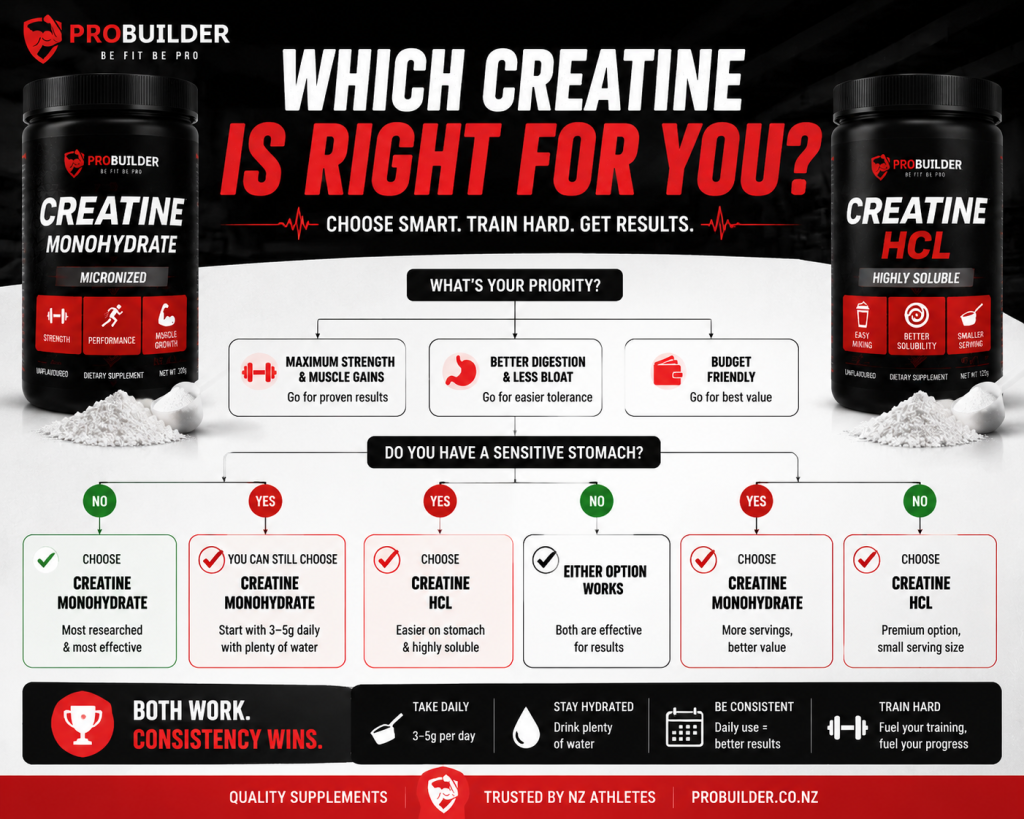
Choose Creatine Monohydrate if:
- You want maximum value for money
- You want the most researched option
- You are a beginner
- You want proven strength gains
- You want long-term reliability
Who Should Choose Creatine HCL?
Choose Creatine HCL if:
- You prefer smaller serving sizes
- You want easier mixing
- You have experienced digestive discomfort with monohydrate
- Cost is not a major concern
After choosing the right type of creatine, the next question is when to take it. Our guide on Best Time to Take Creatine: Before or After Your Workout? explains whether timing affects muscle growth and performance.
Frequently Asked Questions
Current evidence does not show that Creatine HCL produces superior muscle growth or strength gains.
Some users experience mild water retention initially, but this is generally stored within muscle tissue.
Current research does not establish a direct link between creatine supplementation and hair loss.
Yes. Daily supplementation helps maintain optimal muscle creatine levels.
Most users notice performance improvements within two to four weeks of consistent supplementation.
Yes. Creatine can support strength, recovery, and performance in both men and women.
Teen athletes should consult a qualified healthcare professional before beginning supplementation.
Research has consistently demonstrated a strong safety profile for healthy individuals when used as directed.
Final Verdict
When comparing Creatine Monohydrate vs Creatine HCL, the evidence clearly favours Creatine Monohydrate for most people in New Zealand.
It remains the most researched, most affordable, and most trusted form of creatine available today. While Creatine HCL offers improved solubility and convenience, it has not been shown to provide superior muscle-building or performance-enhancing results.
For beginners, intermediate gym-goers, athletes, and bodybuilders alike, Creatine Monohydrate continues to be the gold standard.
If you’re still deciding which product to buy, explore our complete Best Creatine in NZ 2026 Guide.
It compares some of the most popular creatine supplements available in New Zealand and can help you choose the best option for your fitness goals.
The ProBuilder NZ team has years of experience helping New Zealand fitness enthusiasts choose supplements for muscle growth, performance, recovery, and overall health. Our content is researched using scientific literature and practical industry experience.

